mercoledì 30 gennaio 2013

Maldives plummets to 103rd in Reporters Without Borders Press Freedom Index.

The Maldives has plummeted to 103rd in the Reporters Without Borders (RSF) Press Freedom Index, a fall of 30 places and a return to pre-2008 levels.
“The events that led to the resignation of President Mohamed Nasheed in February led to violence and threats against journalists in state television and private media outlets regarded as pro-Nasheed by the coup leaders,” RSF observed, in its annual ranking of 179 countries.
“Attacks on press freedom have increased since then. Many journalists have been arrested, assaulted and threatened during anti-government protests. On June 5, the freelance journalist and blogger Ismail “Hilath” Rasheed narrowly survived the first attempted murder of a journalist in the archipelago,” RSF noted in its report.
The index ranks countries according to levels of press and media freedoms. Countries with the best levels of press freedom rank highest, with northern European and Scandinavian countries filling the top three positions: Finland, Netherlands and Norway respectively. Turkmenistan, North Korea and Eritrea took the bottom three places.
The Maldives’ ranking places it alongside Mali (99th), which experienced a military coup last year, and Fiji (107th), which experienced a coup in 2006.
Prior to the country’s first multi-party democratic election in 2008, the Maldives was ranked 104th – an improvement on its 2007 ranking of 129th, and 2006 – 144th. The country’s ranking in 2009-2010 reflected dramatic improvements in press freedom, rising to 51st and 52nd respectively. The ranking slipped to 73rd in 2011.
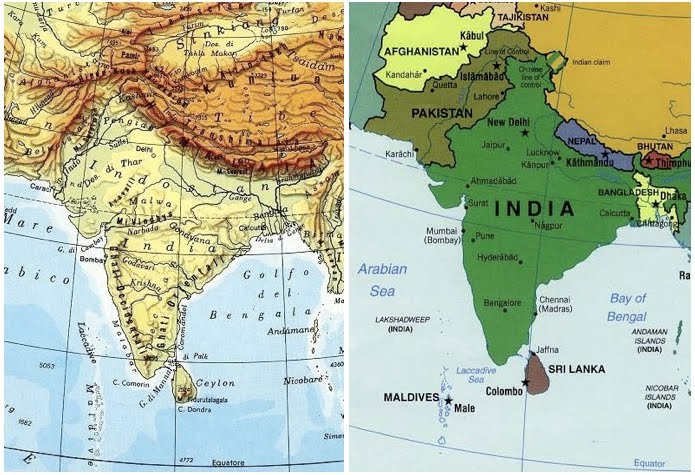
Despite its plunge in 2012, regionally the Maldives still ranked higher than India (140th), Sri Lanka (162nd), Pakistan (158th), and Bangladesh (144th).
“Only three Asian countries are in the top 25 percent of the table, while 15 countries are among the bottom 45 places,” observed RSF.
“Unsurprisingly, one-party authoritarian governments figure more than ever among the predators of press freedom and languish at the bottom end of the table.”

Sri Lanka - Two students released from detention

On 22 January, students Sanmugam Solaman and V. Bhavananadan were released from detention in a “Rehabilitation” centre in Welikanda by the Terrorist Investigation Division (TID). Two others, P. Tharshananth and K. Jenemajeyamenan, remain in detention and at risk of torture.

domenica 27 gennaio 2013

MALDIVES - Trial against minor for “consensual sexual relations” to continue this week.

The case of a 15 year-old minor charged for having “consensual sexual relations” is to continue in the Juvenile Court on Wednesday (January 30), despite the Prosecutor General (PG’s) Office confirming it is reviewing its decision to prosecute the minor.
A Juvenile Court Spokesperson confirmed to Minivan News that the case was expected to continue this week despite calls during the previous hearing on Wednesday (January 23) from the PG’s Office for the case to be delayed pending review.
The filing of criminal charges against the 15 year-old girl – identified as a victim of alleged sexual abuse in a separate criminal case – has been slammed as an “absolute outrage” by international NGO Amnesty International.
The government of President Dr Mohamed Waheed Hassan Manik this month pledged to hold meetings with relevant authorities in the country to amend laws it contended – in certain cases – were punishing sexual abuse victims as if they were criminals.

giovedì 24 gennaio 2013

MALDIVES -Hearing cancelled for 15 year-old girl facing fornication charges.

The hearing of a 15 year-old girl charged with having “consensual sexual relations” was cancelled on Wednesday (January 23) following a request from the Prosecutor General (PG).
Juvenile Court Official told local media that the PG wanted to cancel the hearing as “charges had been raised against an individual for engaging in sexual activity with an underage person while holding a trustworthy position”, local media reported.
The hearing – to take place in Juvenile Court – had been cancelled in order for the PG to see if there was any reason to withdraw the fornication charges against the girl.
According to local media, the letter sent by the PG to Juvenile Court requesting the cancellation of the hearing did not mention who the “trustworthy” person was.
Earlier this month, a PG’s Office spokesperson confirmed that the charges against the minor were related to a separate offence under Sharia Law, which had been filed on November 25, 2012.
The 15 year-old, who is from the island of Feydhoo in Shaviyani Atoll, last year gave birth to a baby that was discovered buried in the outdoor shower area of a home on Feydhoo. Her stepfather was later charged with sexual abuse, possession of pornographic materials and committing murder without intent.
According to local media, the mother is now facing charges of concealing a crime.
The PG’s Office and the Juvenile Court were not responding to calls from Minivan News at time of press.
The charges against the 15 year-old have been labelled an “absolute outrage” by NGO Amnesty International.
In a statement Amnesty International’s Maldives Researcher Abbas Faiz stressed that suspected victims of rape and sexual abuse required counselling and support rather than criminal prosecution.
“We urge the Maldivian authorities to immediately drop all charges against the girl, ensure her safety and provide her with all necessary support,” the NGO’s statement read.
Amnesty Intentional also raised concerns that should the minor be found guilty of “fornication” as reported in the media, she could potentially be flogged in line with sentencing for similar cases held in the country.
“If found guilty of ‘fornication’ the girl could be punished with flogging. She would likely be kept under house arrest until she turns 18 when, under Maldivian law, the flogging can be carried out. Flogging is a violation of the absolute prohibition on torture and other cruel, inhuman and degrading treatment or punishment,” Amnesty International stated.

India, il governo consideri le raccomandazioni per porre fine alla violenza contro le donne.

Amnesty International ha sollecitato il governo indiano a prestare la massima considerazione alle raccomandazioni, rese note il 23 gennaio 2013, dalla Commissione Verma, che era stata istituita a dicembre dopo lo stupro e l'uccisione di una donna di 23 anni a Delhi.

La Commissione Verma ha raccomandato ampie riforme legislative sui reati di violenza sessuale e profondi cambiamenti nel sistema giudiziario e delle forze di polizia per garantire la trasparenza e la responsabilità di queste istituzioni, così come il rafforzamento dei diritti garantiti alle donne dalla Costituzione indiana.

In particolare, le riforme raccomandate dalla Commissione Verma prevedono la revisione delle leggi e delle prassi che garantiscono impunità ai membri delle forze di polizia accusati di torture e violenza contro le donne nei centri di detenzione; l'ampliamento della definizione del reato di stupro, fino a comprendervi lo stupro maritale; la formulazione neutra del reato di stupro, in modo che possa riguardare anche gli stupri commessi ai danni di uomini e persone transgender; la stesura di un nuovo protocollo sull'esecuzione di esami medici di persone che hanno subito violenza sessuale e sulle cure necessarie durante l'iter giudiziario; la sostituzione dell'antiquata nozione di oltraggio alla "modestia" col reato di aggressione sessuale; la punizione dei pubblici ufficiali che omettono di riferire o registrare denunce di violenza sessuale; la revisione della legislazione in materia di traffico di esseri umani, affinché sia conforme con gli standard internazionali; e la modifica delle procedure vigenti sulle indagini relative a persone che possono essere vittime del traffico di esseri umani.

In linea con quanto chiede da anni Amnesty International, la Commissione Verma ha anche sollecitato l'urgente riesame della Legge sui poteri speciali alle forze armate, che garantisce impunità ai militari accusati di violenza contro le donne nelle aree di conflitto, tra cui lo stato di Jammu e Kashmir e gli stati nordorientali dell'India.

"Le autorità indiane devono dimostrare che facevano sul serio quando, un mese fa, promisero che avrebbero dato grande priorità all'esame delle raccomandazioni della Commissione Verma. Il governo deve inoltre avviare programmi di educazione pubblica e prendere tutte le altre misure necessarie per cambiare l'attitudine discriminatoria nei confronti delle donne" - ha dichiarato Tara Rao, portavoce del dipartimento Educazione per i diritti di Amnesty International India.

http://www.amnesty.it/news/india-governo-consideri-raccomandazioni-per-fermare-violenza-contro-donne

martedì 22 gennaio 2013

Bangladesh War Tribunal Gives Death Sentence in First Ruling-

A Bangladesh war crimes tribunal sentenced a former leader of the country’s largest Islamic party to death, its first conviction for offenses carried out four decades ago during the independence struggle with Pakistan.
Abul Kalam Azad, an ex-member of the Jamaat-e-Islami party, was today found guilty of rape and murder. The verdict was handed down in absentia in Dhaka by Justice Obaidul Hassan as the 66-year-old Azad is absconding.
“We should not forget the millions of victims who deserve that their tormentors are held accountable,” Hassan and two fellow judges said in written summary of the judgment. “The passage of time does not diminish the guilt. Justice delayed is no longer justice denied.”
As British colonial rule ended in South Asia in 1947, East and West Pakistan were separated by 2,000 kilometers (1,241 miles) of Indian territory. Pakistani troops in 1971 attempted to quell a nationalist uprising in the east that was triggered by the jailing of Sheikh Mujibur Rahman, who had led his Awami League to victory in elections.
The war ended nine months later with the creation of Bangladesh after Indian forces helped defeat Pakistan’s army. Jamaat-e-Islami supported staying with Pakistan during the war and several of its leaders are among 10 people being investigated by the tribunal on charges they collaborated with Pakistani forces. 


Afghanistan, 11 bambini muoiono di freddo nei campi profughi.

Nel mese di gennaio, il freddo ha ucciso almeno 17 persone tra cui 11 bambini nei campi allestiti per ospitare gli sfollati interni dell'Afghanistan. Amnesty International, come già fece un anno fa, ha sollecitato maggiori aiuti umanitari per superare i mesi invernali senza ulteriori tragedie. Le organizzazioni locali hanno più volte criticato il governo afgano e la comunità internazionale per l'irregolarità e l'inadeguatezza dell'assistenza fornita agli sfollati: niente cibo e riserve per il riscaldamento insufficienti per affrontare tutto l'inverno.

Le 17 vittime si sono registrate nei campi delle province di Kabul ed Herat.

Amnesty International ha parlato coi rappresentanti degli sfollati di un campo della provincia di Balkh. Questi, sotto la neve e con scarso cibo, hanno riferito di non aver ricevuto alcun aiuto, nonostante le ripetute richieste al governo e alle agenzie internazionale.

Nella provincia di Herat, secondo quanto appreso da Amnesty International, l'assistenza privilegia i rifugiati che rientrano in Afghanistan dall'estero, mentre quella ai profughi interni verrebbe ostacolata dalle autorità locali, secondo le quali più aiuti si forniscono e meno si incentivano gli sfollati a fare rientro nelle loro zone di provenienza.

Nell'inverno 2011-12 il freddo aveva provocato oltre 100 morti, per lo più bambini.